BOE showcased its latest display technologies at SID 2026 in Los Angeles on May 5. The company’s 12th consecutive appearance featured more than 30 innovations across LCD, OLED and MLED. Highlights included native FHD 1000Hz gaming, dual four-primary color technology and an ultra-thin Micro LED display.
Display Innovation at SID 2026
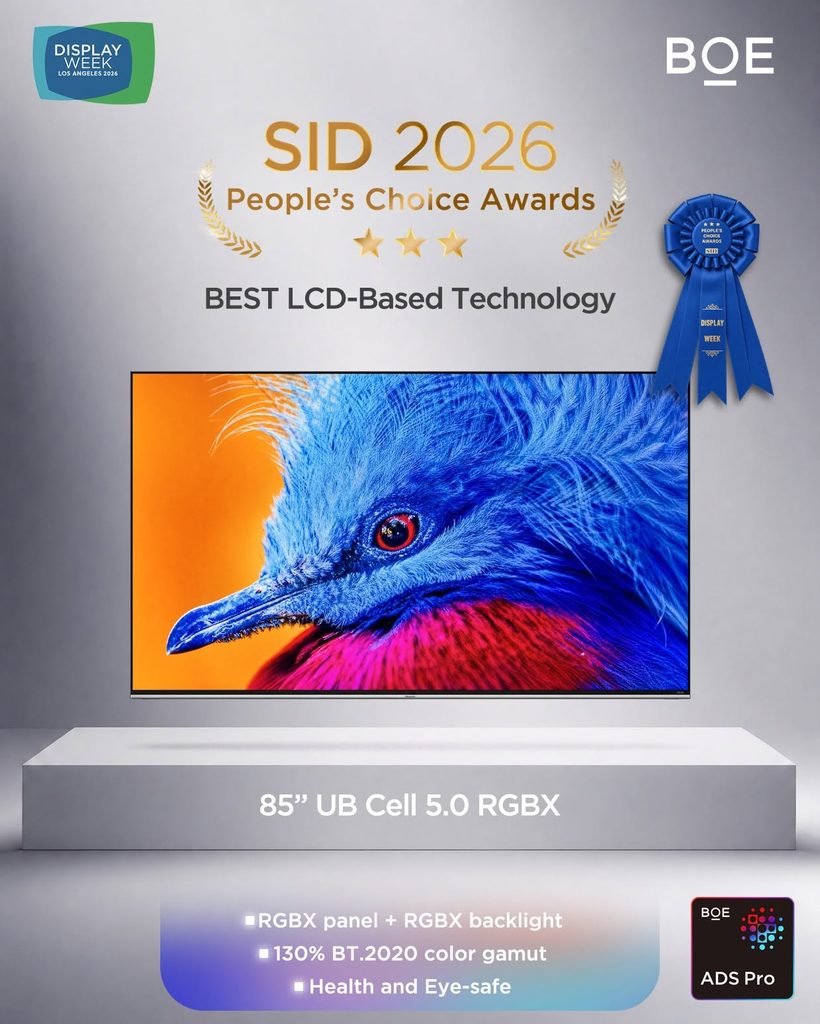
BOE’s 85-inch UB Cell 5.0 RGBX Ultra TV made its global debut. Its industry-first dual four-primary architecture combines an RGBC panel with an RGBC backlight. The TV reaches 130% of the BT.2020 color gamut, expanding color reproduction for premium large-screen displays.
BOE also advanced OLED color accuracy and visual clarity. Its 14-inch TADF wide-color-gamut flexible OLED technology earned Pantone color certification. A separate clarity index links measured performance with human perception across color, sharpness, gradation and dynamic range. Devices using this approach achieved scores above 85.
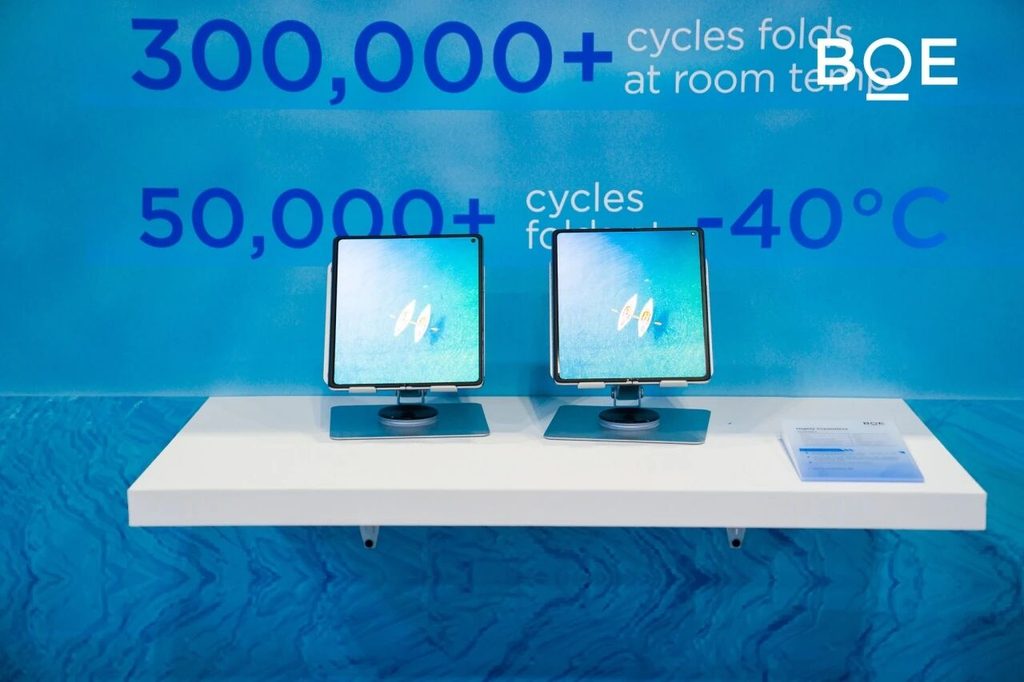
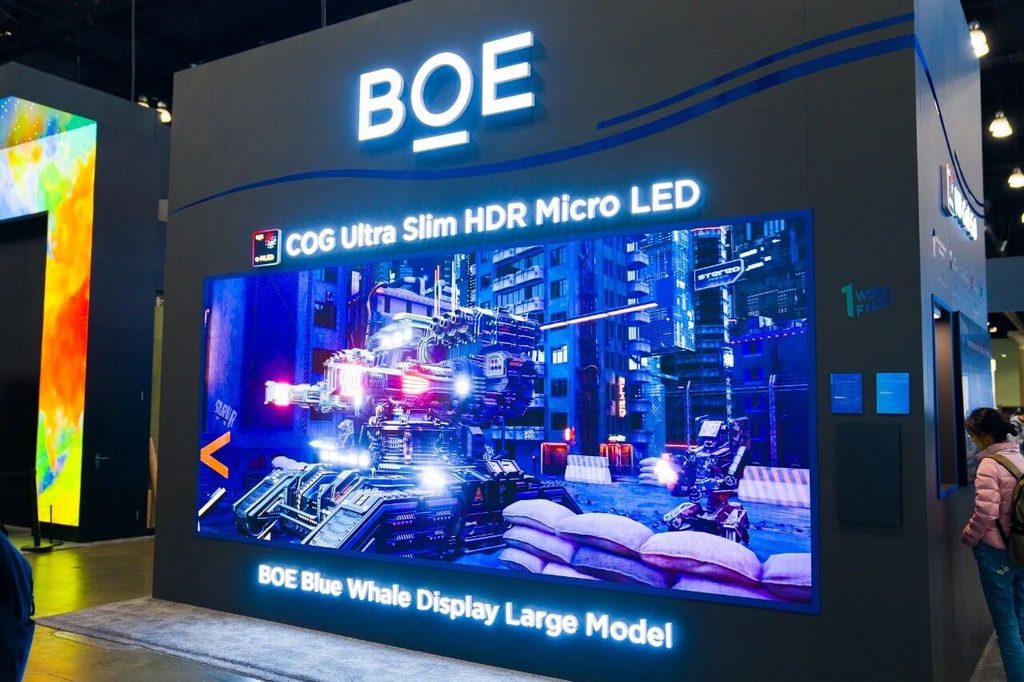
The mirror-smooth flexible OLED display reduces crease depth and slope by 60%, while increasing mechanical strength by 50%. BOE demonstrated repeated folding at −40°C, with the screen retaining its flatness. For larger applications, the new 205-inch COG HDR Micro LED display uses LTPS driving and GIA design. Its glass substrate supports seamless tiling, while modules measure just 5mm thick.
Faster Gaming and Greater Viewing Comfort
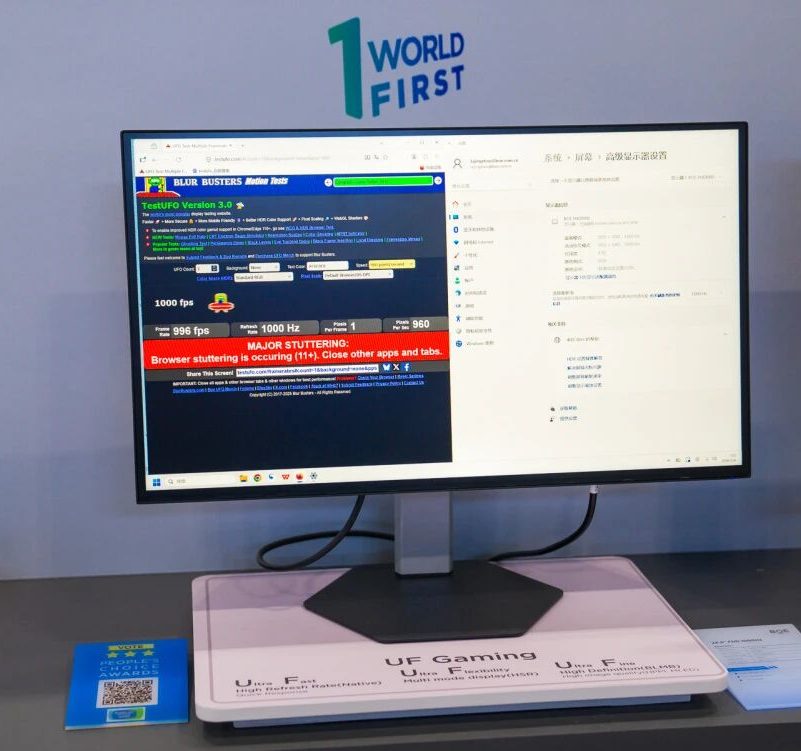
BOE’s 24.5-inch gaming monitor delivers native FHD resolution at 1000Hz. Its oxide backplane supports the high refresh rate alongside a 1ms response time and BOE Low Motion Blur technology. The display preserves wide color gamut and wide viewing angles while keeping fast-moving images clear.
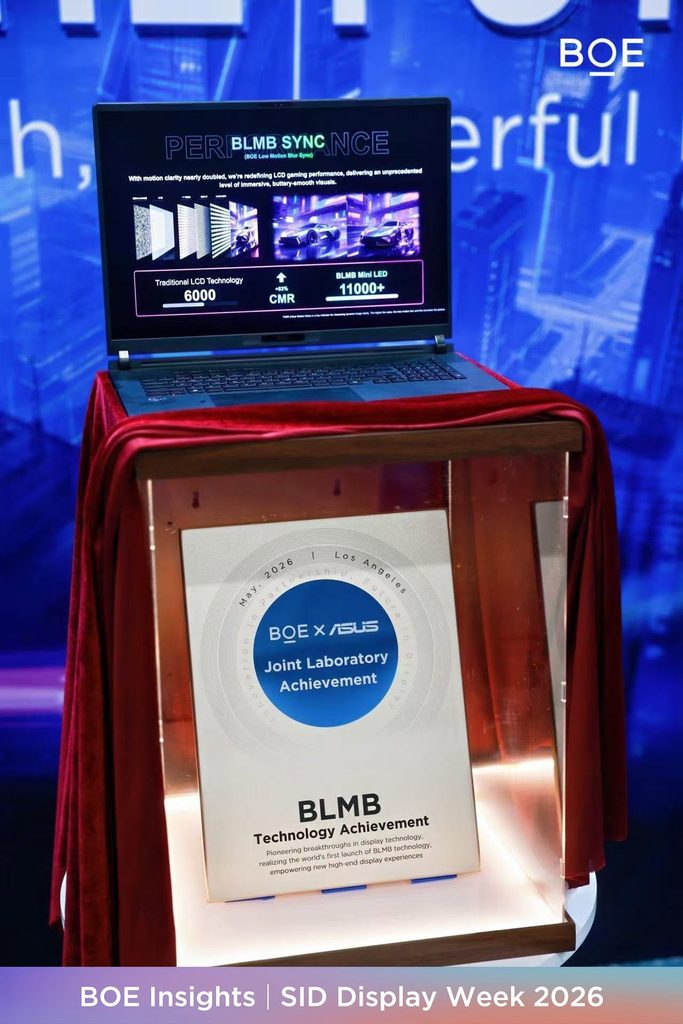
BOE and ASUS also introduced next-generation BLMB technology from their joint laboratory. The development marks further progress in their collaboration on premium laptop displays.
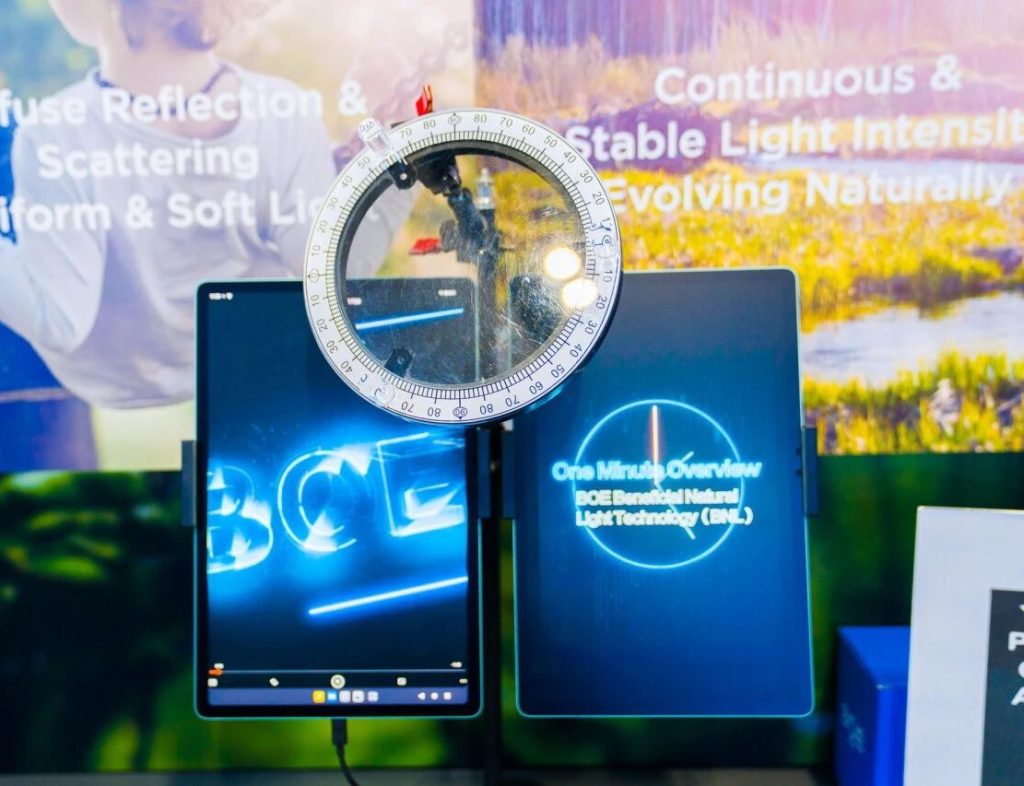
BOE’s 13.8-inch Beneficial Natural Light tablet brings together seven core technologies for viewing comfort. These include random polarization, infrared light and full-spectrum technology. The system combines spectrum optimization, polarization control, light distribution and adaptation over time to reproduce beneficial qualities of natural light.